

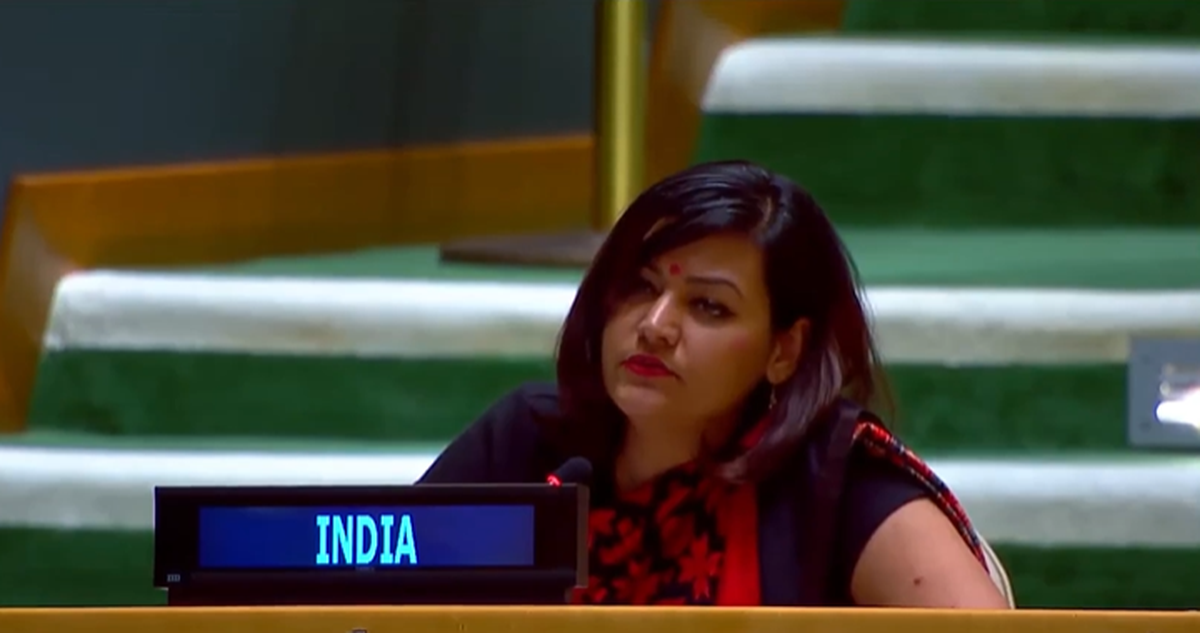
On September 27, India disclosed that Pakistan’s military had“pleaded” for a cessation of hostilities during Operation Sindoor. Indian officials reiterated that no third party could mediate between New Delhi and Islamabad.
This statement came from Petal Gahlot, First Secretary in India’s Permanent Mission to the UN, following remarks by Pakistani Prime Minister Shehbaz Sharif at the 80th session of the United Nations General Assembly (UNGA). Gahlot criticized Sharif’s comments and accused him of indulging in what he termed absurd theatrics at the assembly.
In a pointed address, Sharif lauded former U.S. President Donald Trump, claiming that Trump’s efforts contributed significantly to preventing a war between the two nuclear-armed nations. Gahlot countered this perspective, accusing Pakistan of glorifying terrorism—a key element of its foreign policy.
During his UNGA speech, Sharif expressed Pakistan’s willingness for a “comprehensive, composite, and result-oriented” dialogue with India on unresolved issues, with a special emphasis on the Kashmir situation.
Sharif’s comments included praise for Trump, whom he claimed helped avert conflict in South Asia. He said, “In recognition of President Trump’s wonderful and outstanding contribution to promote peace in our part of the world, Pakistan nominated him for the Nobel Peace Prize.”
Operation Sindoor commenced on May 7, aiming to dismantle terror infrastructure in Pakistan and Pakistan-occupied Kashmir. This operation followed the tragic April 22 Pahalgam terror attack, which claimed the lives of 26 civilians. Thus, Operation Sindoor marked India’s decisive military response to escalating terrorism.
Officials from India underscored that the context for any cessation of hostilities arose from prior direct talks between the Directors General of Military Operations of both nations, positioning India in a firm stance against Pakistani claims. Gahlot concluded that India remains steadfast against any outside interference in bilateral matters.