

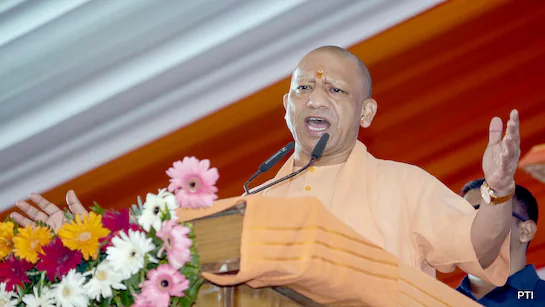
Uttar Pradesh Chief Minister Yogi Adityanath stated that while discussions on colonialism by British and French forces are common, there is limited recognition of “political Islam” and its detrimental impact on Sanatan Dharma. He spoke at an event in Gorakhpur on Tuesday, addressing how historical narratives often exclude this significant theme.
During the event, part of the centenary celebrations of the RSS, Adityanath pointed out that revered warriors like Chhatrapati Shivaji Maharaj, Guru Gobind Singh, Maharana Pratap, and Maharana Sanga fought against the forces of political Islam throughout history. He argued that this crucial aspect of India’s past remains largely unmentioned.
“Our ancestors waged significant battles against political Islam, yet this segment of our history is frequently overlooked,” he remarked at the ‘Vichar-Parivar Kutumb Sneh Milan’ and ‘Deepotsav Se Rashtrotsav’ programmes.
Adityanath expressed admiration for the RSS’s role in the construction of the Ram temple in Ayodhya. He emphasized the dangers of political Islam, pointing out that conversations around colonial resistance tend to neglect this ideological threat to Hindu faith.
“There is extensive discourse on British and French colonialism, yet little is said about political Islam, which has been a critical challenge for our faith,” he added.
The chief minister praised the RSS for its century-long journey, asserting that it has achieved what once seemed impossible. “While members of the Samajwadi Party, the Congress, and the INDIA bloc cast doubt on the Ram temple, RSS volunteers stood firm, believing the temple would be built,” he stated.
Adityanath highlighted the sacrifices made by RSS volunteers, enduring police action, beatings, and restrictions, which ultimately led to the establishment of the Ram Temple, a symbol of their commitment.
The chief minister expressed concern regarding ongoing activities promoting political Islam in present times, suggesting that these challenges continue under various aliases.
He declared that Uttar Pradesh has implemented a ban on the sale of Halal-certified products, alleging that revenues from such sales contribute to conversion, terrorism, and what he termed ‘love jihad.’ This indicates a strategic approach to addressing political Islam and its implications on societal dynamics.
In his discussion regarding the RSS’s centenary initiatives, Adityanath outlined five transformative pillars aimed at creating a ‘Viksit Bharat’: social harmony, family values, environmental stewardship, indigenous self-reliance, and civic duties. “For a society to thrive and transform into a developed nation, the community must lead with the government following suit,” he concluded.
Yogi Adityanath’s remarks have sparked conversations on the portrayal of history in contemporary India, challenging narratives that prioritize colonial impacts while sidelining ideological conflicts such as political Islam. As the RSS celebrates its centenary, the discussions around its role in society and national identity continue to be timely and pertinent.