

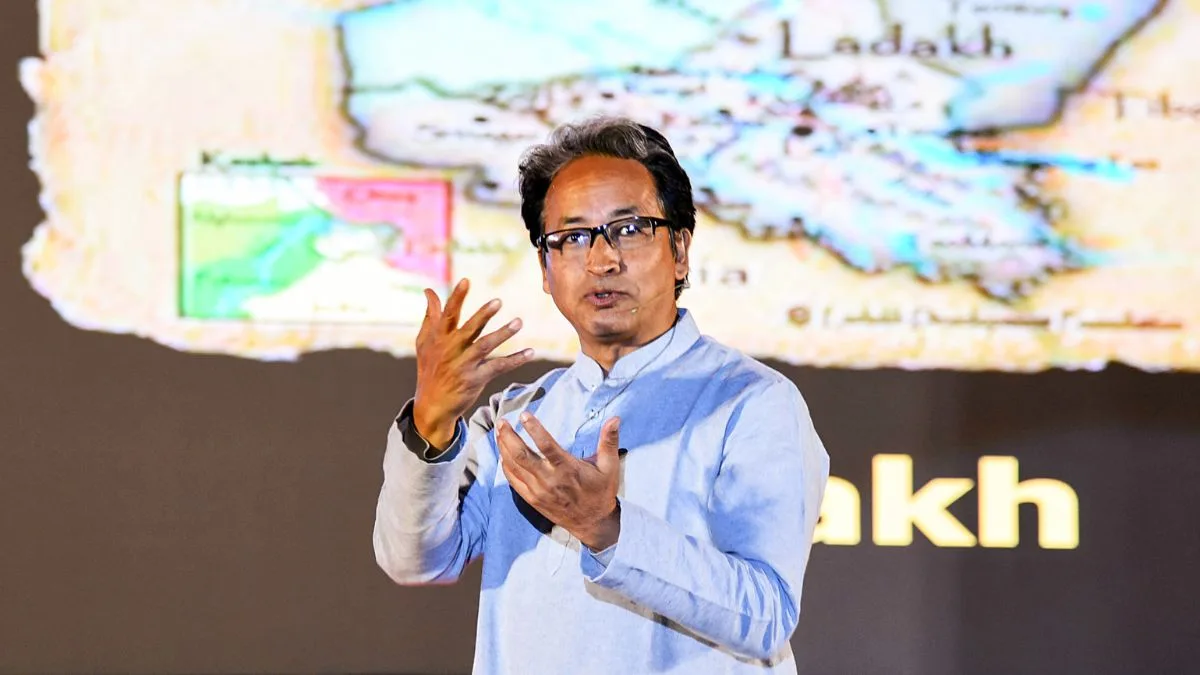
Climate activist Sonam Wangchuk has faced significant government action after being detained under the National Security Act (NSA) and subsequently transferred to Jodhpur Jail in Rajasthan. This event unfolded on Friday, following recent upheaval in Ladakh, where demands for statehood and constitutional protections intensified.
The Ladakh administration announced Wangchuk’s detention at midnight, as tensions escalated following violent protests two days earlier, which resulted in tragic losses with four individuals dead and approximately 90 injured due to police firing.
On September 10, Wangchuk began a 35-day hunger strike in Leh. His efforts aimed to advocate for the Sixth Schedule of the Indian Constitution and to secure protections for Ladakh’s fragile ecosystem. However, he paused his fast on September 24 after violent clashes erupted, significantly impacting the local community.
Social media erupted with reactions to Wangchuk’s detention, with many users dubbing it a “black day” for Ladakh. Criticism also targeted Lt. Governor Kavinder Gupta, as numerous individuals demanded his resignation, accusing him of culpability in the police actions that led to the unnecessary loss of life, including that of a retired soldier.
The official statement detailing Wangchuk’s detention cited concerns regarding his ongoing activities posing a threat to the state’s security and public order. The announcement indicated that Wangchuk had persistently engaged in actions detrimental to community peace.
According to the government, despite previous attempts to communicate and facilitate discussions with Wangchuk before the High-Powered Committee (HPC) meeting, he continued his hunger strike. The administration described his recent speeches referencing significant historical protests and movements as incendiary and misleading, directly correlating those to the protests in Leh that resulted in violence and damage to properties.
“This entire situation could have been averted had Mr. Wangchuk prioritized peace over personal and political motivations. Given the chaos that ensued as a consequence of his provocations, it was deemed unsustainable to keep him in Leh,” the press release stated.
The administration emphasized that restoring normalcy in Leh is paramount and argued that safeguarding public order necessitates stringent measures, including Wangchuk’s transfer to Jodhpur.
As the situation continues to unfold, observers are closely watching the impacts of Wangchuk’s detention on ongoing protests and the broader discourse surrounding Ladakh’s statehood. Advocates for environmental and political rights in the region fear that suppression of voices like Wangchuk’s could further escalate tensions and hinder peaceful dialogue.
The incident has prompted local leaders and global environmental advocates to reflect on the significance of Wangchuk’s activism. His commitment to climate issues and local governance matters underscores crucial themes of autonomy and ecological conservation in Ladakh, which may resonate beyond regional protests into wider national debates.