

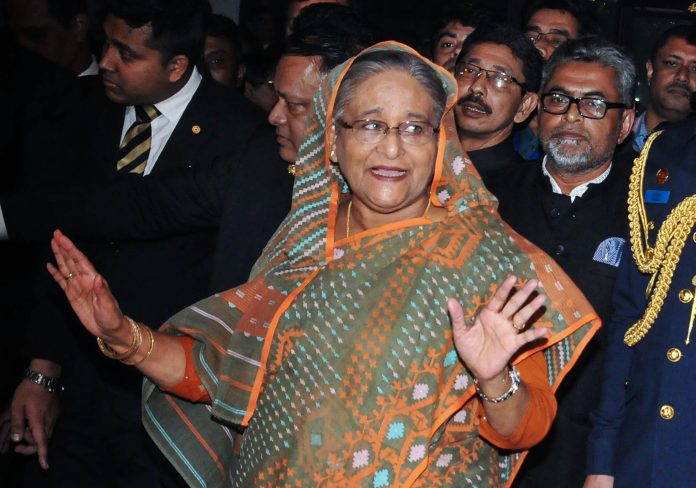
Ousted former Prime Minister Sheikh Hasina has declared her intention to return to Bangladesh only once there is a restoration of “participatory democracy,” a lifting of the ban on the Awami League, and the conduct of free and inclusive elections. Speaking in an exclusive email interview with PTI from India, Hasina, who fled to India on August 5, 2024, amid mounting anti-government protests, is adamant that only a democratic framework will allow her safe return.
Hasina asserted that conditions must be favorable for her party, stating, “The most important condition for my return to Bangladesh is the same condition that the Bangladeshi people require: a return to participatory democracy.” She emphasized that the interim government must allow the Awami League to participate and prepare for elections that include all political entities.
The former Prime Minister and Bangladesh’s longest-serving leader expressed her gratitude to India for providing her refuge, stating, “I am immensely grateful to India’s government and its people for their kind hospitality.” Her remarks reflect a deep-seated respect for the Indian populace, which, despite recent unsettled political climates, Hasina believes will continue to ally with Bangladesh.
Hasina’s departure came in the wake of considerable unrest as public frustrations boiled over, leading to her resignation. When questioned regarding her government’s handling of the protests, Hasina admitted, “Obviously, we lost control of the situation and that was regrettable,” attributing the unrest to seasoned political agitators posing as student leaders.
She firmly rejected any suggestions that she had called for a boycott of the elections scheduled for February 2025, arguing that a credible election must include her party. “Tens of millions of people support us… It would be a huge missed opportunity for a country that badly needs a government with genuine consent of the people,” she asserted boldly.
One of her sharpest critiques was directed toward the current interim leader, Dr. Muhammad Yunus. Hasina claimed that Yunus’s administration is “endangering ties with India” and promoting extremist elements within Bangladesh. “Yunus’ hostility to India is foolish and self-defeating… He is unelected, chaotic, and dependent on extremist forces,” she noted, warning that his administration’s actions pose a significant threat to Bangladesh’s diplomatic relationships.
In response to concerns from Indian citizens about the Yunus-led government, Hasina reassured them, stating, “The interim government doesn’t represent what our people think. India is and will remain our nation’s most important friend.” This statement underlines her commitment to maintaining strong ties between Bangladesh and India, despite the current political turmoil.
Hasina also expressed her willingness to stand trial under international scrutiny, even at the International Criminal Court (ICC), dismissing the Bangladesh International Crimes Tribunal as a political tool designed to eliminate her party. She remarked, “They want to eliminate us as political forces. The fact that they would use the death penalty to silence opponents shows how little respect they have for democracy or due process.”
In her critique of the Yunus administration, Hasina noted that he initially garnered support from some Western liberals, a backing she claims is diminishing as those observers witness his government’s troubling actions such as appointing radicals and undermining minority rights.
Overall, Sheikh Hasina’s statements and conditions for her return to Bangladesh reflect her resolute stance on democracy and political inclusion. As she navigates this complex political landscape from her current refuge in India, the implications of her return—or lack thereof—will significantly impact Bangladesh’s future.