

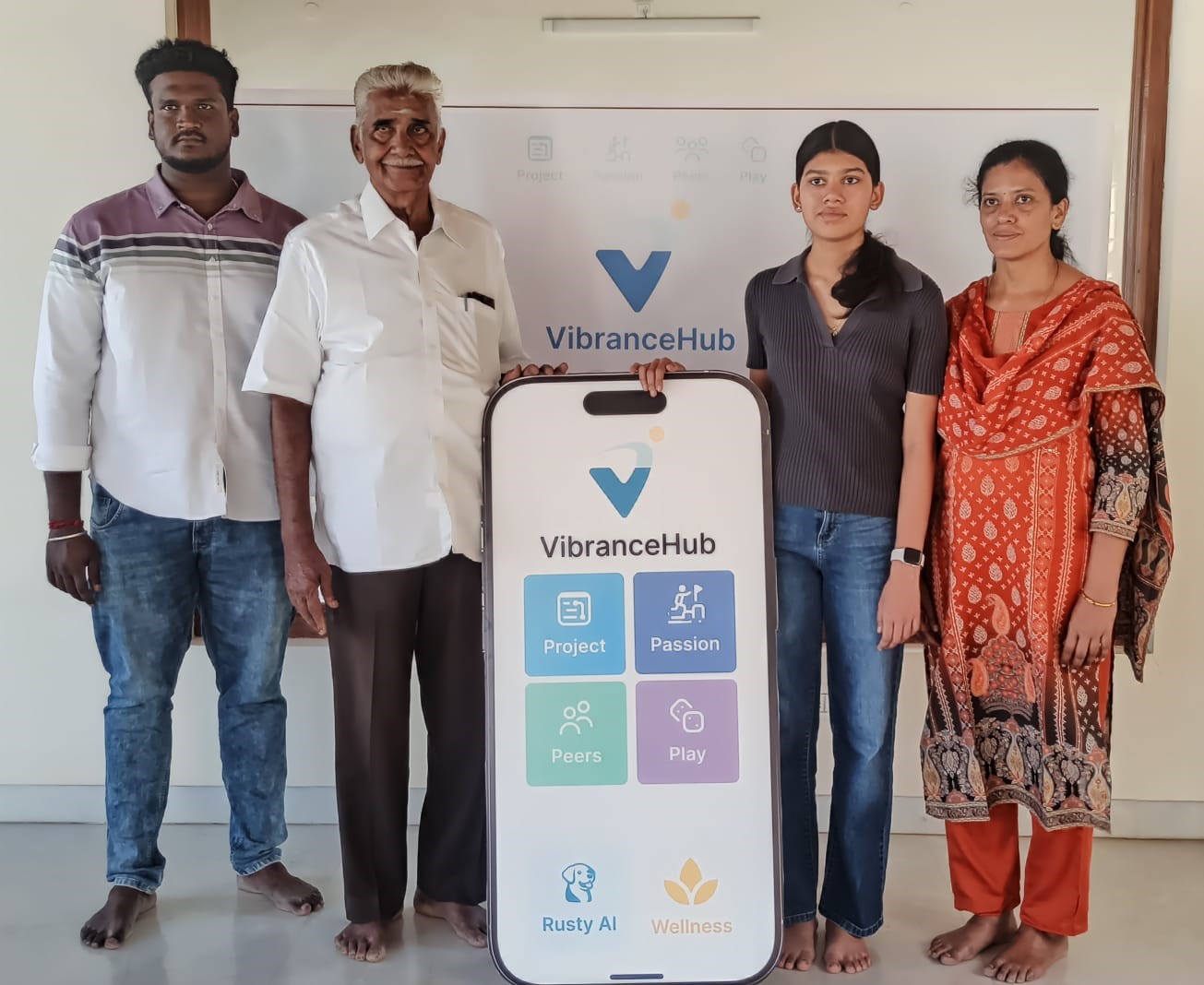
COIMBATORE — Rithanya Sivaram, a Class 12 student at The Indian Public School, has launched Vibrance Hub, a platform designed to support project-based learning, peer collaboration, and holistic wellbeing. This initiative addresses a critical need as India prepares students for an AI-dominated future, where creativity and sustained innovation are paramount over traditional rote learning.
“In the age of AI, information is commoditized. What matters now is what you can make, how you think, and whether you can sustain creative work over time,” says Sivaram. “Atal Tinkering Labs have given students the tools to innovate at a national scale. Vibrance Hub provides the community and wellbeing practices necessary to transform interests into ongoing projects.”
Vibrance Hub operates on the principles of MIT’s Lifelong Kindergarten framework, emphasizing Passion, Projects, Peers, and Play. This approach recognizes that maker education extends beyond merely creating; it cultivates computational thinking, resilience through iteration, and collaboration—skills that artificial intelligence cannot match.
Sivaram emphasizes the importance of maker education, asserting, “The goal is not just to build things but to instill valuable skills like critical problem-solving and teamwork within students.” By integrating yoga-based wellbeing practices, Vibrance Hub further aligns with the necessity for mental and emotional balance in a rapidly changing technological landscape.
In many ways, Vibrance Hub represents a revival of India’s educational roots. Historically, the country’s gurukul system valued experiential learning over passive information intake. Before Macaulay’s infamous Minute on Education in February 1835, which enforced a rote-learning system meant for colonial administration, students engaged in hands-on learning to master subjects like metallurgy, astronomy, and medicine.
This historical perspective aligns with the National Education Policy (NEP) 2020, which calls for reintroducing a maker-centric approach. The NEP recognizes that India’s future depends on innovation and creativity, rather than merely repeating learned information.
The Atal Innovation Mission (AIM), established in 2016 by NITI Aayog, represents a significant step towards scaling this maker-centric philosophy to new heights. AIM seeks to actualize the NEP 2020 goals by fostering creativity and innovation through the development of infrastructure for hands-on learning across the nation.
“Vibrance Hub not only adheres to these educational principles but also promotes collaboration and community engagement among its members,” Sivaram concludes. “We need to enable today’s students to become the creators of tomorrow.”