
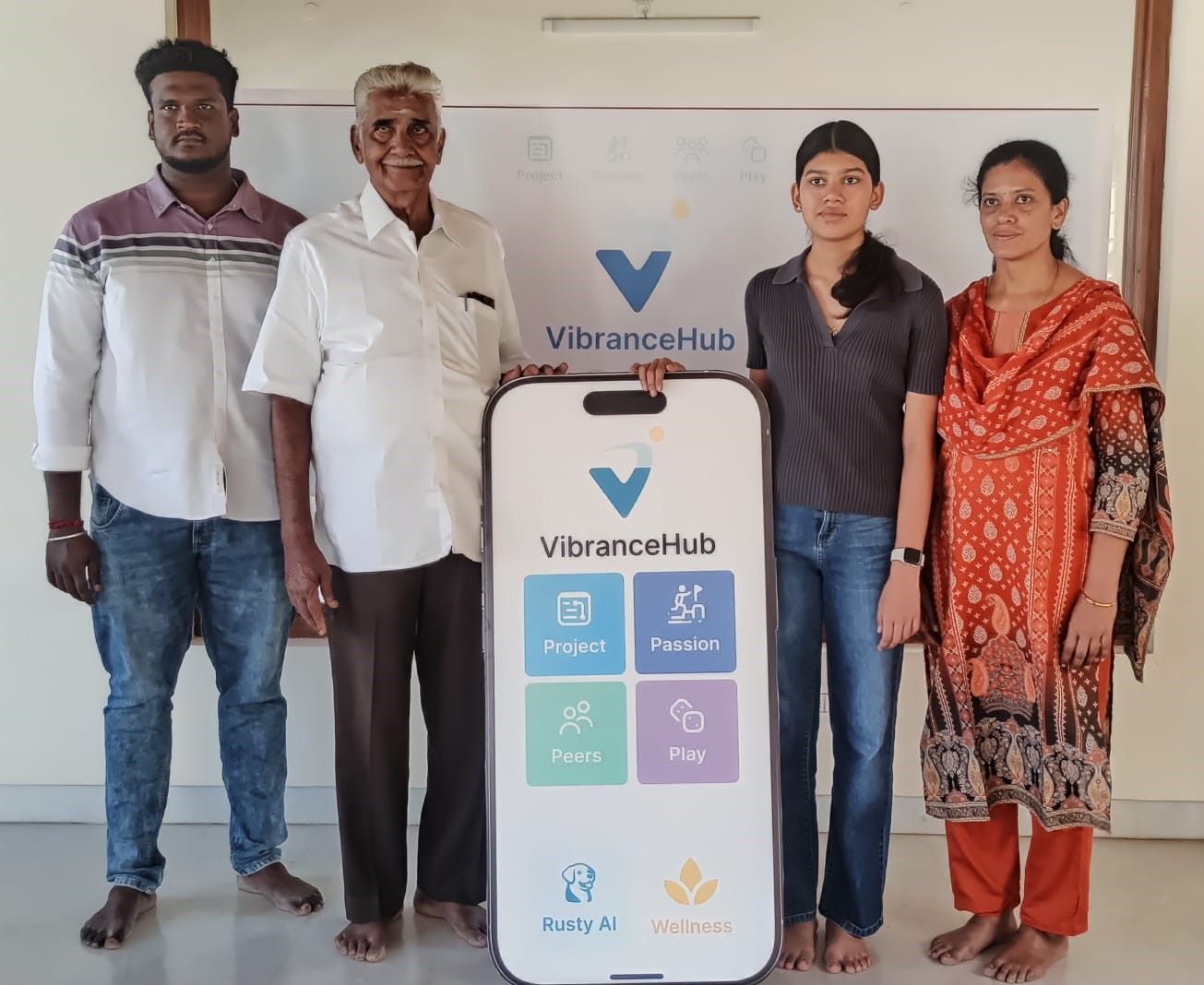
COIMBATORE — Rithanya Sivaram, a Class 12 student at The Indian Public School, has launched Vibrance Hub, a progressive platform designed to integrate project-based learning, peer collaboration, and wellness support. This initiative addresses a vital gap in India’s educational landscape as it prepares students for an AI-driven future where creativity and sustained innovation are paramount.
Sivaram emphasizes the pressing need for such initiatives: “In the age of AI, information is commoditized. What matters now is what you can make, how you think, and whether you can sustain creative work over time,” she states. The Atal Tinkering Labs program has provided students across the nation with tools and spaces for experimentation. In complementing this initiative, Vibrance Hub offers a supportive framework, community, and wellness practices that help transform student interests into long-term creative endeavors.
Based on the MIT Lifelong Kindergarten framework—comprising Passion, Projects, Peers, and Play—Vibrance Hub recognizes that maker education extends beyond mere construction. It aims to foster skills like computational thinking, resilience through iteration, and collaborative capacity—traits that are uniquely human and irreplaceable by AI.
Gifted children often tackle challenges with bold experimentation. However, years of standardized tests and an obsession with correct answers can stifle this fearless spirit, making students overly cautious and self-critical. The innate creativity that once flourished tends to fade, buried beneath an avalanche of practicality and the pressure for perfection. This leads many to label themselves as “not creative,” a misconception that Vibrance Hub seeks to dispel.
In essence, Vibrance Hub echoes the foundational principles of India’s educational heritage. Before the imposition of a rote-learning system by Macaulay’s Minute on Education in February 1835, the ancient gurukul system in India championed experiential, hands-on learning. Students engaged in metallurgical tasks by forging, explored astronomy through observation, and practiced medicine in real-world contexts.
The National Education Policy 2020 recognizes this value, advocating for a revival of the maker-centric approach in education. The policy underscores that India’s future prosperity hinges on fostering creators and innovators, rather than rote repeaters of information.
[The Atal Innovation Mission](https://aim.gov.in/), initiated in 2016 by NITI Aayog, represents a concerted effort to actualize the maker-centric philosophy across India. AIM addresses the commitments outlined in NEP 2020 by establishing concrete infrastructure for hands-on learning and encouraging creativity at scale, preparing students to thrive in a future characterized by rapid technological advancement.
Vibrance Hub stands as a beacon of hope for a new generation of learners. It embodies the call for a thoughtful, nurturing educational environment where creativity flourishes alongside knowledge. As the education system evolves, platforms like Vibrance Hub remind us of the need to embrace innovation and holistic learning methods.